Friday, August 03, 2012

Aggro Man


I've tried in this space to give David Aldwinkle (Arudo Debito when he made Japan his home) his due, but with his 'micro-aggro' obsesssion, David no longer merits our serious consideration; this will be the last post about Monsieur Aldwinkle.

The Japan Times's resident sage, having run out of meaningful things to say, asserts:

 Microagressions, particularly those of a racialized nature, are, according to Dr. Derald Wing Sue in Psychology Today (Oct. 5, 2010), "the brief and everyday slights, insults, indignities, and denigrating messages sent to (visible minorities) by well-intentioned (members of an ethnic majority in a society) who are unaware of the hidden messages being communicated."
They include, in Japan's case, verbal cues (such as "You speak such good Japanese!" — after saying only a sentence or two — or "How long will you be in Japan?" regardless of whether a non-Japanese (NJ) might have lived the preponderance of their life here)...

Wow.
Someone compliments me on my Japanese- how dare they.     

Someone wants to know how long I plan to be in Japan- the nerve.

Someone observes that I use chopsticks properly (not all Japanese do)- how presumptuous.


I can't take it anymore. I'm bein' oppressed!

No wonder David left Japan- he couldn't enjoy himself here.  In Dave's disordered mind, racism rears its ugly head in every social interaction, however harmless on the surface. 

And by the by, don't you just adore people who use fancy-sounding words such as 'preponderance' (which doesn't work in this context anyway) when a humbler term ('most', in this instance) does the business?

Dave, dude- get over yourself.


Tuesday, April 17, 2012

Activist Arudo

Japan watchers are probably familiar with the name Debito Arudo.  Born David Christopher Schofill (surname later changed to Aldwinkle) in the US in 1965, Arudo made Japan his full-time home from the early 1990s until 2011, becoming a naturalized Japanese (and proud owner of a new cognomen) in the process.  Arudo has been an indefatigable campaigner for the rights of foreigners in Japan, successfully suing a business owner in Hokkaido whose spa refused foreign guests. While Arudo has done the expat community susbstantial good, I find his unrelenting criticism of Japan and the Japanese debilitating; rarely does he have anything positive to say about the country.  The activist continues to comment on the expat experience, submitting a monthly column to the Japan Times. But now that he's back stateside, he should consider human rights abuses closer to home. For starters, he might want to take up the cause of Moslem Americans, increasingly targeted by their own government in its domestic war on terror- seems to me they have a much harder time of it than expats in Japan.       

Thursday, April 12, 2012

The Naruko (鳴子)

The naruko is a wooden clapper formerly used by farmers to scare birds away from crops. Suspended from string or wire, the naruko produces a loud noise when agitated by wind.  Today the instrument is used as a noisemaker at dance festivals.
                                                          

鳴子の本場は、実は香川県でした。
* Some readers of this blog may remember a photo of 'Narukoman', a festival participant dressed in naruko costume; unfortunately, I experienced technical problems with the uploaded photo and cannot show it at present. 

The Hanging Scroll- More Bits and Pieces of Japan

The hanging scroll (kakejiku- 掛け軸) is one of the most characteristic of Japanese arts.


Scrolls are placed in alcoves (called tokonoma).
 

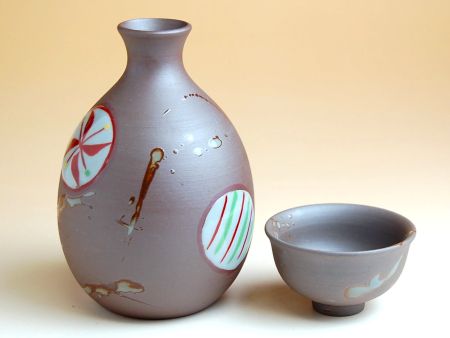
The Tokuri: More Bits and Pieces of Japan

The earthenware bottle from which nihonshu (日本酒), or Japanese rice wine, is decanted is the tokuri (徳利).  The term is sometimes used to denote bottles (not necessarily earthenware,though) containing shouyu (醤油- soy sauce)and other liquids used in cooking.  The cup pictured is referred to as a sakazuki  or guinomi.  Incidentally, tokuri may refer to a ''turtle neck' shirt or sweater.
                                                           

Sunday, April 01, 2012

Calling All Municipal Hires

If you are a native English instructor directly hired by a municipal board of education, you probably haven't seen a pay raise or bonus during your tenure; regardless of your years of experience, and regardless of the glowing evaluations you may have received from your schools. You've probably been stuck at 300,000 yen/ month pre-tax, maybe with a housing allowance, but that's all.

If you are a veteran municipal hire, it may not sit too well with you to have better-paid, less-experienced colleagues who work under the auspices of a certain nationally-sponsored program- co-workers whose local taxes are paid for them, for instance, and whose post-tax salary is a guaranteed 3.6 million yen/ year.  It doesn't sit well with me.

Veteran teachers may be interested to know that from 2012, native teachers hired under this Ministry of Education program will have to pay their own taxes.

But here's the rub: in the 3rd year of their employment, such teachers will receive 3.9 million yen in pre-tax remuneration, and in the 4th and 5th years, 3.96 million.

The time is long since due for veteran municipal hires to receive compensation equal to that of these teachers- at the very least.

Friday, March 30, 2012

Teaching in Japan: The Private Sector

Thinking of coming to Japan to teach English? Already here and doing just that?  In either case, it wouldn't hurt to know a little about one of the mechanisms for staffing Japanese elementary, middle, and senior high schools with native English instructors. 

The mechanism is called gyoumuitaku (業務委託), and it is used in Japan not only for providing schools with English instructors but also for such municipal services as garbage collection. 

Only the former concerns us here, and to refer to it let us hereinafter adopt the shorthand 'Interac', one of the largest private employers of expats in Japan. 

Interac offer a decent monthly salary (reduced, though, during the long vacs) and generally keep out of the instructor's way.  All fine and good.

But not so fine and good is the fact that Interac do not enroll their teachers in the government- mandated social insurance schemes.

How do Interac get away with this?  By fudging the numbers.

In Japan there is a tacit understanding that if an employee is on the books as working less than 30 hours/ week, the health and labor ministry will not enforce its own requirement that all workers in Japan be enrolled in the country's welfare scheme. Interac say their teachers work only 29.5.

Now if you are young and healthy, the fact that Interac have not enrolled you in Japan's social insurance scheme may seem of little moment. In fact, your wallet will be that much bulkier come payday.

But if you find yourself in Japan longer than you originally intended, if you end up making the country your adopted home, it will matter greatly in the long run that Interac did not fulfill its legal obligations.

The online site Japan Today is currently running an interview with E. Darrin McNeal, Human Resources Director of Interac.  I've submitted comments regarding gyoumuitaku and the fact that Interac violate the law.  The comments have been removed. 

Here is my latest posting:

Dear Moderator,

I've noticed that my comments regarding the crucial differences between the 'gyoumuitaku' and 'haken' systems for staffing Japanese primary and secondary schools with native English instructors have been deleted.

Why?

Your softball interview with E. Darrin McNeal, director of the human resources department of one of Japan's largest private employers of expats, fails to address issues of concern to your readers. My comments (deleted) did just that.

Specifically, I referred in my comments to the fact that Interac fail to enroll their teachers in Japan's pension and health insurance schemes, in contravention of the law.

I also discussed in the removed comments the inefficiency and inconvenience inherent in the 'gyoumuitaku' system, a fact noted by the Ministry of Education and influencing its advice to BOEs that they cease relying on companies such as Interac to staff schools with native English speakers.

Not shilling for Interac, are you?

Mar. 31, 2012 - 01:24PM JST

         
Update: Not surprisingly, given the journalistic standards at Japan Today, the above post was removed by the comments moderator.  

And, a word about haken: literally dispatch, another mehanism by which teachers are sent to schools, the difference being that the teachers work directly for the education authorities.

Update: I should have included the information that Interac teachers are typically required to be at schools 7.5 hours/ day, far longer than the 29.5 hours/ week the company says its teachers work. 

Friday, February 17, 2012

The Death of Abubakar Awudu Suraj

Abubakar Awudu Suraj, a Ghanian national who entered Japan in 1988 on a 15-day visa, was deported as a visa overstayer on March 22, 2010, having been arrested in an immigration sweep in 2009. 

Mr. Suraj never made it to Cairo, the destination of his Egypt Air flight, on that fateful day in March, 2010.  In fact, for him there was neither take-off nor landing. What happened? This post will try to provide some background. See here for an informative piece from the Japan Times.

As I see it, this matter really concerns excessive force used by airport police, regardless of whether one believes, as I do, that Mr. Suraj deserved amnesty for his visa violations.

Tuesday, February 14, 2012

Difficulty Verifying Johnson's Claims

A visit to Reuters's site does not produce any search results to support Christopher Johnson's claim on the sidebar of his site 'globalite' that "Reuters named our Yak Packer photos of Tibetan riots among their Pictures of the Decade".

Maybe I just don't know how to use search engines.

Christopher Johnson, Tibet Uprising

As written previously, any attempt to reach an informed opinion in the case of Canadian freelance journalist Christopher Johnson necessarily involves Mr. Johnson's credibility. 

Johnson is a bona fide journalist- there is no disputing that.  But certain of his boasted journalistic accomplishments do not appear to hold up under scrutiny.

Take for example the claim on Johnson's site's sidebar that he "witnessed Tibetan uprising in Lhasa, broke story via Reuters, Toronto Star, Christian Science Monitor (CSM), others".

Johnson did indeed write a piece on the uprising for the CSM.  But the dateline is March 14, 2008, Tokyo- not Lhasa, Tibet.  In other words, Johnson was not a witness of the unrest.  Who provided eye-witness accounts? Johnson writes in his report that information on the uprising was obtained from a group of foreign backpackers who communicated to reporters via phone and e-mail that day.


Christopher Johnson: Redux

A few weeks ago I wrote (and later deleted) several posts about Canadian freelance journalist Christopher Johnson on this blog. If you haven't been following Johnson's ever-changing tale of alleged intimidation and abuse at the hands of Japanese immigration at Narita International Airport and the security detail employed by airlines to supervise foreign nationals denied entry into the country, see here.

Now, I am not the only one who has doubted parts of Johnson's narrative since his story surfaced, as the former of the above links shows.  But why did I delete my blog posts about Johnson?  Simply, I felt they were too harsh and that I was being a bit of an asshole.  More than a bit, really. I had challenged Johnson's assertions and impugned his credibility without performing more than a superficial background check of claims he makes on his blog.

Johnson's story raises important issues. First and foremost is the question of what goes on in immigration detention facilities in Japan.  Setting aside for a moment the matter of Johnson's veracity, it seems fair to conclude, based on reports of others' experiences (links forthcoming), that Japanese immigration authorities sometimes cross the line.  The Japanese justice ministry, under whose bailiwick immigration falls, needs to investigate vigorously claims of detainee abuse and to be forthcoming regarding practices at its detention centers.

Another crucial issue raised by Johnson's account is that of his own reliability.  We have only his own word for what happened. If we are to add Johnson's tale to the body of evidence (links forthcoming) demonstrating that Japanese immigration sometimes abuse detainee rights, then we must be able to trust him.  As Christopher Johnson is a journalist, this is especially true.

 Links: See here , here, and here to read about 2 Ghanian men who died in separate incidents in 2010 while in the custody of Japanese immigration.

The Global Detention Project provides valuable information (several years old, though) on Japanese detention practices and facilities here.

A Retraction: Thousands of US Infants Die from Fukushima Radiation

In a post from December of last year concerning fallout from Fukushima, Japan, I cited a study conducted by 'respected' epidemiological experts whose research was published in the International Journal of Health Sciences.
The study purported to trace a link between the nuclear catastrophe at Japan's Fukushima Dai-ichi plant and an modest increase in infant mortality in the US last spring.

The journal is peer reviewed, and I trusted the editorial staff  and reviewers to do their job. Which they didn't.

Turns out I was very wrong about the authors' findings; in fact, the authors, anti-nuclear activists, cooked the books. 

I stand corrected- thanks to a good friend for alerting me to problems with my post. 

See here for a powerful debunking.

Tuesday, December 20, 2011

Thousands of US Infants Die from Fukushima Fallout

Earlier this month the peer-reviewed International Journal of Health Studies published a study by respected epidemiologists on the correlation between a spike in infant mortality across the US earlier this year and the arrival in mid-March of a radioactive plume from Japan's stricken Fukushima nuclear facility. The authors suggest that a dramatic increase in infant deaths, totaling nearly 14,000, is attributable to the fallout from Fukushima and is strikingly similar to a rise in such deaths in Europe following Chernobyl. See here for the original report and here for a summary.

I remember dismissing as alarmist and uninformed the dire warnings of foreign observers on the severity of Fukushima back in  March.  Nuclear experts from around the world strongly suspected that meltdown was underway in one or more reactors in the hours and days following March 11 even as the Japanese government and the operator of the Fukushima facility strenuously rejected the very possibility of this, instead assuring the international community that the reactors' fuel rods were completely submerged at a safe temperature and that the situation was under control. 

The failure of government and nuclear industry to give careful consideration to historical evidence of massive tsunami in the past- geologic findings published a decade before 3/11 showed that waves easily capable of overtopping the Fukushima plant's defenses had been generated by powerful quakes in the region 1000 years earlier- coupled with the superstitious belief that to prepare for the worst was to invite it, established a pattern of complacency that was seen in the authorities' response to the catastrophe.

The Japanese nuclear establishment and regulatory agency were as unprepared for 3/11 as was the Japanese shogunate of yore for the massed hosts of Mongol invaders.  Unfortunately, this time there was no 'divine wind' to come to the rescue.


Wednesday, November 09, 2011

The Tsugawa Fox Festival

Tsugawa, Niigata, holds it's "Fox Festival" every May to celebrate the nuptials of a local couple. For the event the faces of bride and groom are so painted as to resemble those of the stylized foxes seen at Shinto shrines dedicated to Inari, the god of rice, whose familiar is the fox.

By the by, it's unclear to me why Tsugawa, which is not located in one of Niigata's rice-growing regions, should have a prominent festival honoring Inari. I'll have to do a bit more research, evidently.

Incidentally, vinegared rice wrapped in fried tofu, the latter traditionally favored by foxes, is called inari zushi.

Tuesday, November 01, 2011

The Shirone Kite Festival

One of the largest festivals of its kind in the world, the Shirone (Niigata City) kite festival is held in June every year.

The Nebuta Festival

The most famous nebuta matsuri is held the first week in August in Aomori, the northernmost prefecture on Honshu, Japan's main island. The event typically draws over 3 million visitors, making it one of Japan's top summer attractions.

Tuesday, October 11, 2011

Shukunegi, Sado Island

The Edo era village of Shukunegi, situated at Sado's extreme western end, is known for its narrow alleys, roof stones, and for the prow-shaped house in the bottom photo.  Shukunegi is sometimes used as a location for the filming of period dramas. Unfortunately I had only 15 min. to explore the village.  It's another "must-see" spot on the island.

Sado Shipbuilding Museum, Ogi


Pictured is a reconstruction of a sengokubune, a large Japanese sailing vessel (the mast is shown at bottom).  Gold mined on Sado was a major source of revenue for the Tokugawa shogunate, and sengokubune were used to transport the precious metal to the mainland for its final, overland ourney to Edo. This particular vessel, called the Hakusan Maru, is on display in Ogi at the shipbuilding museum, which is attached to a larger Sado folk culture museum housed in a former elementary school. I arrived late in the day and hadn't the time to do its exhibits justice.  If you ever visit Sado Island, make sure a stop is on your itinerary, and give yourself a couple of hours for the complete tour.   

Labor of Love


Retired carpenter Hiromichi Nakagawa makes these fantastic scale models at his workshop in Ogi, Sado Island. He doesn't use a kit but instead fashions every single piece himself.

Interesting Sado Sights

Hasakake, or reaped rice hung on bars for airing, at the entrance to a farmhouse on Sado.


Not sure how the fishing boat came to be here.