Thursday, January 20, 2011
The "Thrice" Sedge Hat
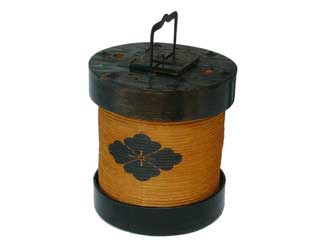
Sando means "three times," "thrice". So why is this mushroom-shaped hat called the sando kasa? In the Edo Era (1603-1868), Osaka merchants established a courier service connecting Edo, Kyoto, and Osaka. Letters and parcels were sent three times a month, on the 2nd, 12th, and 22nd, and were delivered by "postmen" wearing hats like the one above. In this way the hat came to be known as the "thrice sedge hat". The sando kasa became widely adopted for the protection it offered against rain and sun, shielding the heads of travelers and farm laborers as well as the postmens' pates.
Monday, January 10, 2011
A Service Announcement
Most online shops retailing Japanese products sell items of inferior quality, if made in Japan at all. Japanese lacquer-coated chopsticks for only $2.95 a pair? Buy several, because you'll find the lacquer gone after only a few meals. Premium green tea for just $9.95. That's a half-brewed idea; the truly good stuff goes for a bit more.
If you can tell me approximately what you want and, more importantly, how much you want to spend, I can find the item for you. The product you desire at the quality you deserve. Guaranteed.
Drop me a line at japanglimpsed@yahoo.com.
Brian S.
If you can tell me approximately what you want and, more importantly, how much you want to spend, I can find the item for you. The product you desire at the quality you deserve. Guaranteed.
Drop me a line at japanglimpsed@yahoo.com.
Brian S.
Wednesday, January 05, 2011
A "Sumiyoshi" Shrine
Osaka City's Sumiyoshi Taisha shrine complex contains a nice example of the sumiyoshi style. Note the crossed beams (chigi) at the ends of the roof and those perpendicular to the ridge, called katsuoki, the latter deriving their name from the Japanese word katsuo, meaning "bonito".
A "Nagare-tsukuri" Shrine
Most of the shrines in Japan are built in the "Nagare-tsukuri" style. The distinctive feature of such shrines is the uneven length of the two roof sections, the front being somewhat longer than the rear.
Minehonsha, situated atop Mt. Oyama (3003 m) in Toyama Prefecture, is an example of the nagare style.

Minehonsha, situated atop Mt. Oyama (3003 m) in Toyama Prefecture, is an example of the nagare style.

A "Hie-zukuri" Shrine
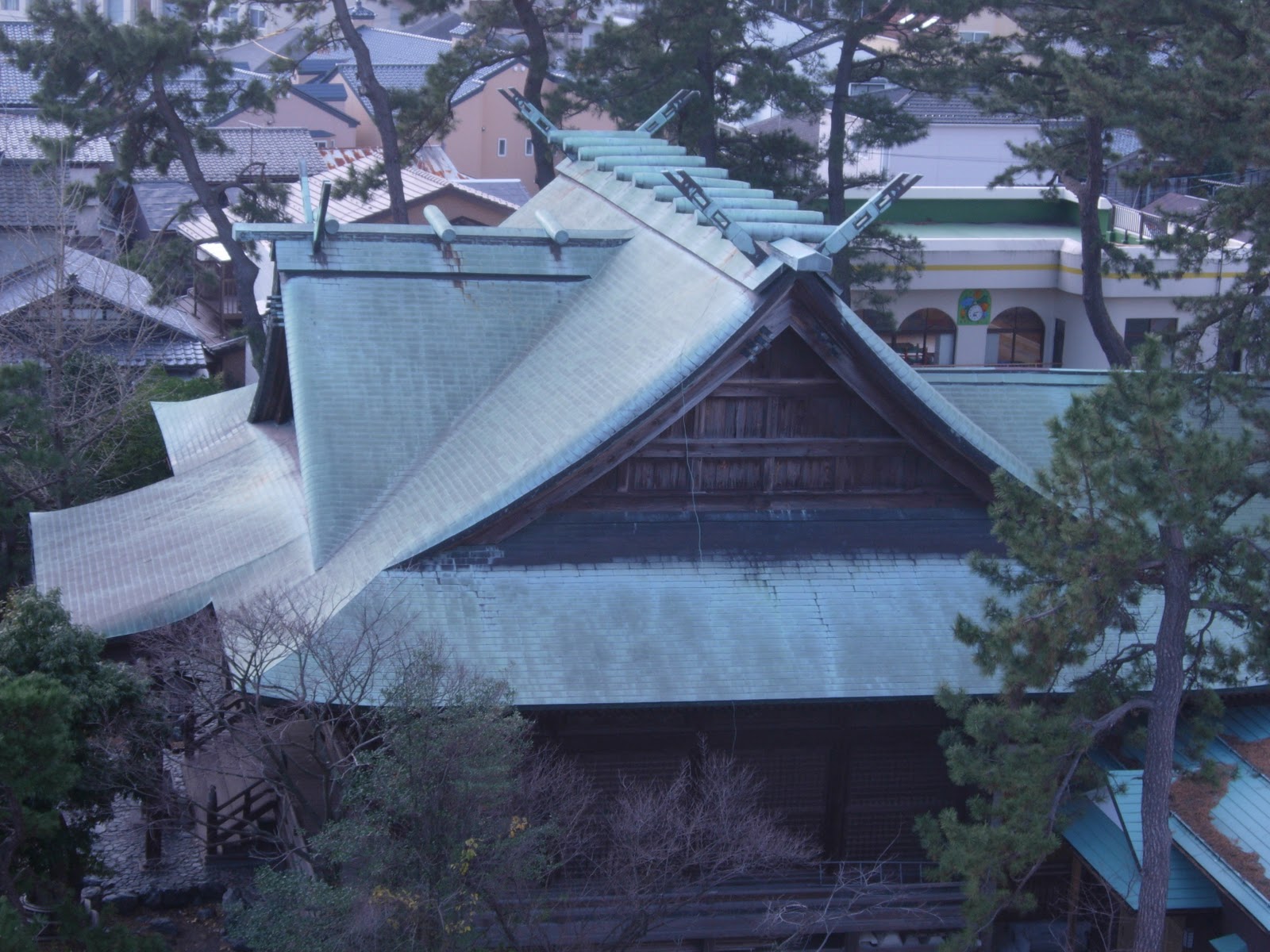
Check out the curves of the Niigata Great Shrine, located across the street from my house in downtown Niigata City. The shrine is a fine example of the "Hie" style of Shinto architecture.
Monday, November 22, 2010
Japanese Shrines: You've Seen One, But You Haven't Seen Them All
Shinto shrines may look alike, but there are numerous architectural styles. The above is the main hall at Izumo Oyashiro in Shimane, a famous example of the Taisha Style.
Sunday, November 14, 2010
More Fall in the City
The former residence of a wealthy family of importers, the house and gardens date from the 1920s and are now the property of Niigata City and open to the public.
Fall in the City
cherry trees (さくら) showing their fall color at a local park
Japanese ginko, with storehouse (kura) in the lower photo
Tuesday, October 19, 2010
Friday, September 24, 2010
Japanese Clogs # 2: Nomeri Geta
These shoes incline forward, towards the toe, and are named accordingly. What is the merit of this arrangement? I confess that I haven't the slightest, as they say. I shall ask my mother-in-law, an expert on such matters, about these geta. But in the meantime, let's enjoy the clogs' nice curves.
Monday, September 20, 2010
Japanese Clogs, or Geta
The traditional Japanese footwear is the wooden clog, called geta. Several styles are available, so the following posts will introduce the visitor to the world of Japanese shoes.
Thursday, September 09, 2010
More Bits and Pieces: The Jizaikage
The jizaikage is the pot hanger from which a kettle or cooking pot is suspended above the brazier (irori) in traditional Japanese homes.
Tuesday, August 31, 2010
The Bura Lantern
I confess to being more than a little unsure where one lantern leaves off and the next commences, but so be it. Lanterns are an integral part of Japanese festivals and culture, and whether or not you remember their names, it is easy to appreciate their charm.
Thursday, August 19, 2010
Tuesday, August 17, 2010
The Koubari Lantern
- the koubari lantern at a summer festival. The lantern derives its name from the long pole to which it is attached.
Subscribe to:
Posts (Atom)