-some of the lovey scenery I saw, with a photo of the Yamagata Prefecture Welcome Center (where I had a bowl of soba for lunch) at bottom
Monday, May 17, 2010
Motorcycling Diary Vol. 1 #1
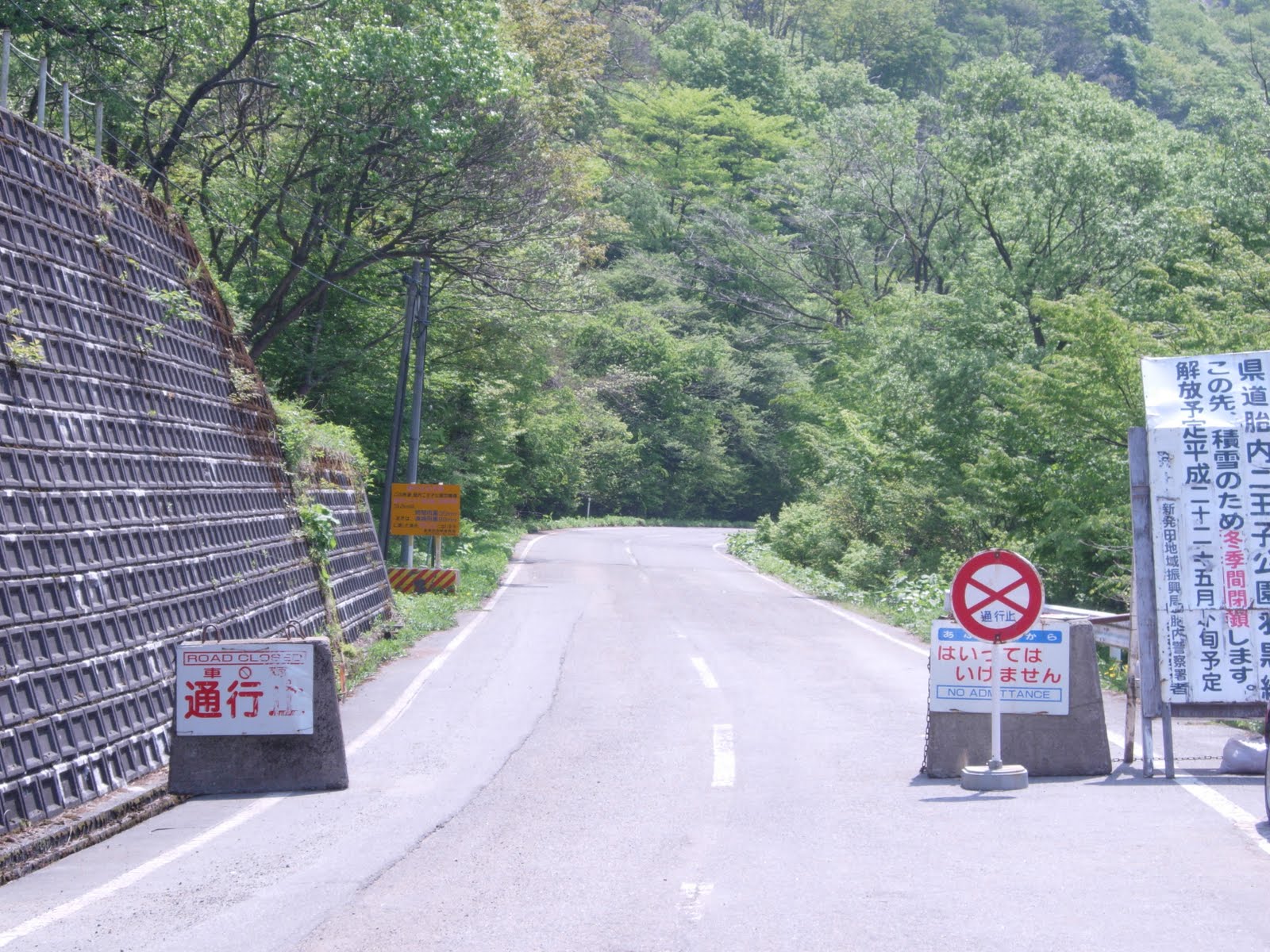
-on the way to and at the entrance of the Okutainai-Nioji Park, unfortunately still inaccessible owing to snow farther up the valley
Tuesday, May 11, 2010
The Love Hotel
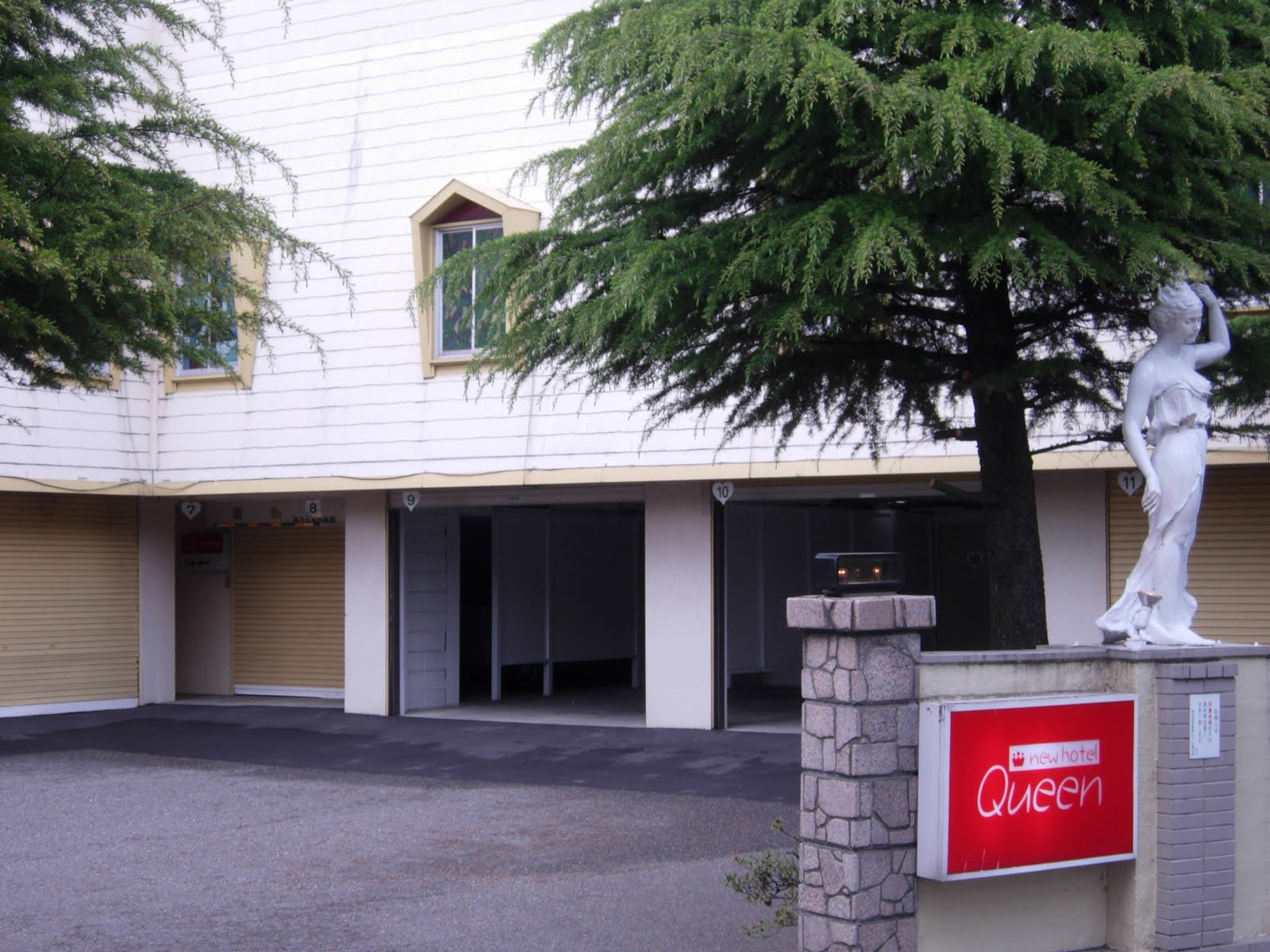
"Love" Hotel- the name says it all. Many young adults live at home. Most Japanese apartments have thin walls. For these and other reasons- love hotels are private, discreet, and reasonably priced- such establishments do a roaring trade. The hotels have shuttered bays for guests' vehicles, as the top photo of the Queen shows. Between the hours of 6pm and 1am, the Queen's room charge is 2,000 yen, approx. $20. The real bargain is the overnight stay, which is 4,500 yen between the hours of 11pm and 10am-weekdays only.
Monday, May 10, 2010
Don't leave home without it
Public restrooms in Japan lack hot water and are typically unfurnished with toilet paper. Never leave home without a packet of tissue or your own private roll, especially if you are headed out for a long bike ride. Furthermore, be careful not to mistake the girls' room (topmost photo) for the boys' (middle).
Children's Day Koinobori
Children's Day is May 5. Traditionally, colorful carp streamers, or koinobori, are flown to celebrate the festival, for the fish, which swims upstream to spawn, symbolizes strength. It is hoped that children, particularly boys, will emulate the carp. I saw a few of these decorations on my cycling trip even though the celebration had ended several days earlier.
Sights along the Way: Old School , New School
There are always interesting things to see during a cycling outing through the Japanese countryside.The photo below is very 'old school'- literally; the building is likely used as a community center in the village. The new school is directly across the street.
Tokoroten
At Zensaku Chaya I had plate of tokoroten, or gelidium jelly. It's odorless, tasteless, and the consistency of rubber. Sound appetizing? Chilled, with a generous amount of soy sauce, vinegar, and spicy Japanese mustard, it makes a nice treat on a warm day. By the by, in the lower photo you can see that the block of gelatin has been pressed through a wire screen to form 'noodles'.
A Recent Cycling Trip
The weather has improved at long last after an unusually cool and unstable spring in Niigata. I took advantage of the favorable conditions last Saturday to make a 100 km cycling trip into the foothills of the Echigo mountain range, which raises its peaks some 40k to the south and east of the city. 50k into the ride I rested at one of my favorite roadside tea shops, Zensaku Chaya, established in 1868.
Sunday, April 18, 2010
Hiroshige's Tokaido Series: #40, Fujikawa
Fujikawa is a section of Okazaki City, Aichi Prefecture. The lower photos show the area as it appears today. Fujikawa is located about 300 km from the Nihonbashi, Tokyo, start of the Tokai Road.
Friday, April 02, 2010
Saturday, March 27, 2010
Hiroshige's Tokaido Series: View 42
Regarding this woodcut, I especially like the shape of the pine tree in the middle ground- it is so typically Japanese.
Monday, March 08, 2010
Hiroshige's Tokaido Series: View 43
Hiroshige's woodcut at top, with contemporary views below. The area (in present-day Nagoya) is traditionally famous for its beautiful tie-dyed cloth,called arimatsu shibori.
Tuesday, March 02, 2010
Wednesday, February 24, 2010
Then and Now
I am neither blind nor indifferent to Japan's faults, as some may have inferred from the previous post. One of these, as I see things, is a frequently displayed indifference to the plight of structures of cultural or historic value. Case in point: this photo shows a Meiji era estate in Niigata City, its extensive grounds an oasis of green in the drab city center, its spreading trees the favored roost every evening of hundreds of birds. The stone marker informs us that the Meiji Emperor rested at the residence in 1878 during a tour of northern Japan. Deserving of preservation, surely. Alas, no. I passed by the other day, and the above is what I saw. Everything reduced to rubble, bagged, and ready to be carted away. Mottainai.
Wednesday, February 17, 2010
A Few Thoughts
One of my readers has complained (in a manner as nasty as it was ungrammatical) that I gloss over Japan's 'dark underside'. Japan has its dark side, to be sure; I am aware of no country that hasn't. But to those who, like my learned and gracious reader, expect me in this blog to ridicule the country for its failings, to screech with righteous indignation over the occasional instance of Japanese discrimination against foreigners, or to debunk every laughable attempt at historical revisionism by some right-wing nut-job, to such visitors I should like to recommend the following: http://www.debito.org/ . Unlike our dear Mr. Debito, I am not an expat in Japan who is only content when he is disparaging the Japanese. I have better things to do. I happen to be fairly happy here, and this blog reflects my interest in and respect for my adopted home and its culture.
Tuesday, February 16, 2010
View 50 :Sakanoshita (坂之下), from Hiroshige's Tokaido Series
Sakanoshita, on the border between Shiga and Mie prefectures, lies about 420 km from the start of the Tokai Road in Tokyo. In Hiroshige's day there were about 125 inns for travelers in Sakanoshita. The hamlet today comprises a little over 100 households.
Tuesday, January 26, 2010
Sunday, January 24, 2010
Hiroshige's Tokai Road: View 52
Subscribe to:
Posts (Atom)